Clinic software that starts small and grows with the practice.
HealthOS 24 runs a clinic or polyclinic from the token counter to the cash close: appointments, consultations with SOAP notes, prescriptions, an in house pharmacy and lab, and doctor shares on every paid bill. You can switch on only the modules you need today and add the rest as the practice grows.
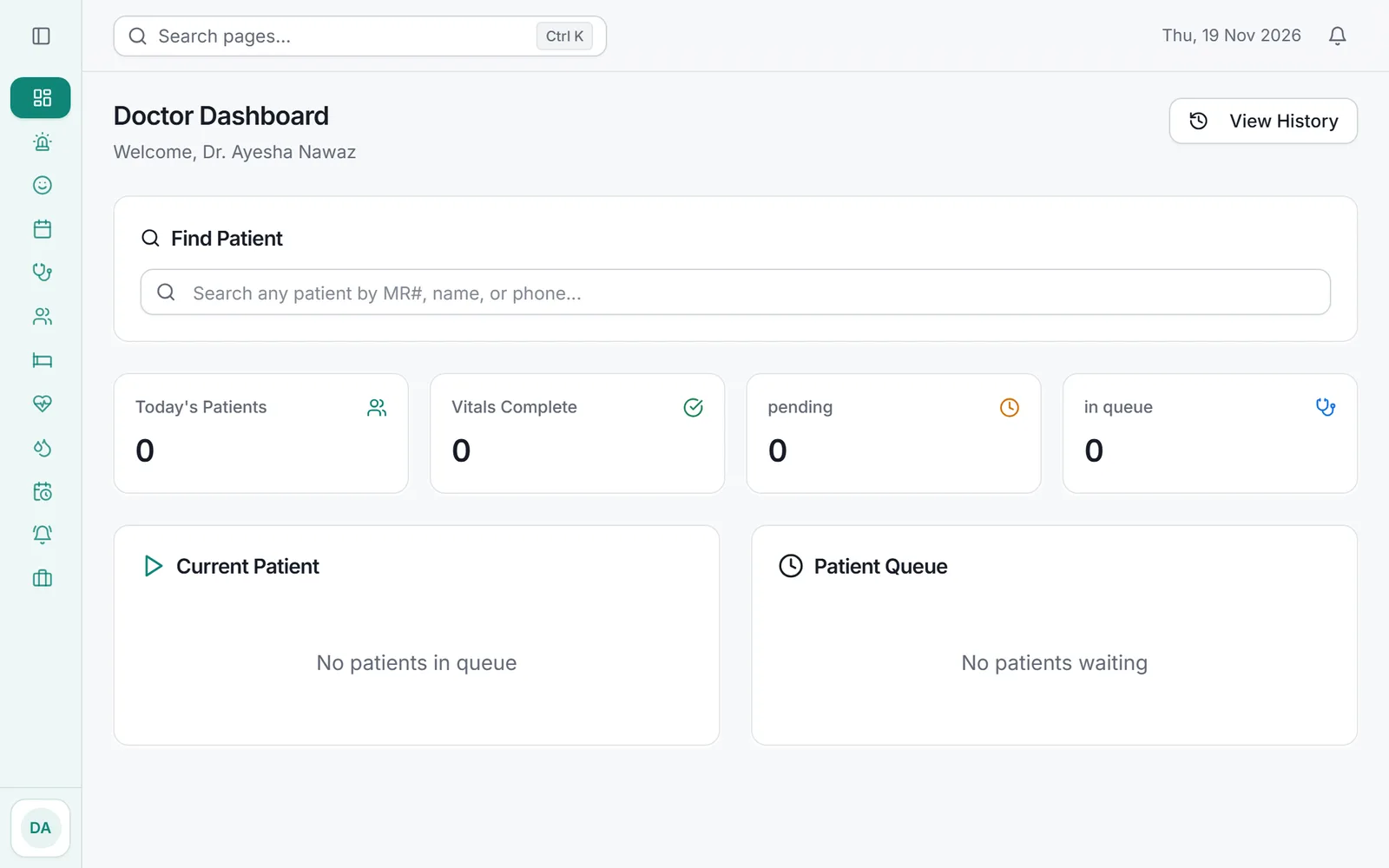
What does a clinic actually need from software?
Most clinics need the same handful of things done well: know who is waiting, give the doctor a clean record to write in, send the prescription to the counter, collect the fee once and close the cash correctly at the end of the day. Everything else is secondary until those work.
HealthOS 24 covers that daily loop first. The token counter issues a token and collects the consultation fee in one step, prints the token slip and receipt, and places the patient in the doctor's queue. Booked appointments and walk ins share the same queue, so the waiting room has one order.
- Token counter with fee collection, token slip and receipt
- Appointment calendar by doctor and slot, with WhatsApp reminders
- Waiting room display boards with voice announcements
- One medical record number per patient, with duplicate checks
How does the consultation work for the doctor?
The nurse records vitals against the visit before the patient goes in. The doctor writes a structured SOAP note with diagnoses, and the consultation has to pass a completion check before it can be signed off, so notes are not left half written.
Prescriptions are written from the formulary with allergy and interaction alerts, and a signed prescription appears in the pharmacy queue. Lab and imaging orders raised in the consultation go straight to the relevant worklist and onto the bill.
Can we run our own pharmacy and lab inside the clinic?
Yes. The pharmacy holds stock by batch and expiry, dispenses the earliest expiring batch first and sells at a barcode point of sale counter. The lab works from a test catalogue with reference ranges by age and sex, prints barcoded sample labels and releases reports on your letterhead after verification.
Because both sit on the same patient record as the consultation, nothing is retyped. The prescription the doctor signed is what the pharmacist dispenses, and the tests the doctor ordered are what the lab receives and the cashier bills.
How do daily cash closing and doctor shares work?
Each cashier opens a billing session, takes payments by the methods you allow, and closes the session with a daily cash summary. Discounts and refunds route for approval before they apply, so the closing figure matches what was actually collected.
Doctor plans are set once per doctor: fixed salary, per consultation fee, revenue share or a mix. A share is credited only when the invoice is paid, and each doctor has a wallet balance traced to the patient and service, settled through payroll.
Can we start with a few modules and add more later?
Yes. Modules are switched on or off for the organisation, and for each branch, from the settings. A single doctor practice can begin with registration, OPD and billing, then add the pharmacy, lab, accounts or HR when it is ready, without moving data to a new system.
When a clinic grows into a day care centre or a small hospital, the same system already has inpatient, theatre and emergency modules. The patient records, billing history and accounts built up in the clinic years carry straight across.
Clinic needs and how HealthOS 24 handles them
| Need | What goes wrong without a system | How HealthOS 24 handles it |
|---|---|---|
| Patient queue | Staff call names aloud and patients cannot tell whose turn it is. | One token queue for walk ins and bookings, with display boards and voice calls. |
| Consultation notes | Handwritten notes are incomplete and hard to find on the next visit. | Structured SOAP notes with diagnoses and a completion check before sign off. |
| Prescriptions | The pharmacist reads a handwritten slip and allergies are missed. | Formulary prescribing with allergy and interaction alerts, sent to the pharmacy queue. |
| Pharmacy stock | Expired batches sit on the shelf and stock is counted at month end. | Batch and expiry stock with first expiry, first out dispensing and live deduction. |
| Cash close | Cash is counted against a paper list and differences go unexplained. | Billing sessions per cashier with a daily cash summary and approved exceptions. |
| Doctor shares | Shares are worked out in a spreadsheet, sometimes on unpaid bills. | Shares credited only on paid invoices, with a wallet balance per doctor. |
Which modules matter most here?
What do buyers ask about Clinics and Polyclinics?
Is HealthOS 24 too large for a small clinic?
No. Modules are switched on per organisation and per branch, so a clinic can run only registration, OPD and billing at first and add the pharmacy, lab or accounts later.
Can the consultation fee be collected when the token is issued?
Yes. The token counter collects the fee, prints the token slip and receipt, and places the patient in the doctor's queue in one step.
Do prescriptions reach our own pharmacy automatically?
Yes. A signed prescription appears in the pharmacy dispensing queue, with allergy and interaction alerts checked when it is written.
How are doctor shares paid in a polyclinic?
Each doctor's plan is set once. Shares are credited when the patient's invoice is paid, kept in a wallet balance and settled through payroll or as payouts.
See HealthOS 24 on your own workflow.
We walk you through it with your departments, rates and reports in mind.